















The Short Version
A CMA is still where you win or lose a seller’s trust — and it used to eat two to four hours per report. AI instant CMA tools collapse the manual assembly into minutes, so you start from a finished draft instead of a blank spreadsheet. The catch: AI formats a bad comp set as beautifully as a good one, so the judgment, adjustments, and final price stay yours.
A comparative market analysis is still the most important document an agent puts in front of a seller. It’s where trust is won or lost. And for years it has also been one of the most tedious things on an agent’s plate — most agents spend two to four hours on a single CMA, pulling comps from the MLS, adjusting for square footage and condition, formatting the report, and packaging it for a listing presentation.
AI is changing the time cost of that work, not the importance of it. The agents pulling ahead in 2026 are the ones who let AI handle the assembly so they can spend their energy on the part a seller actually pays for: judgment, strategy, and a confident recommendation.
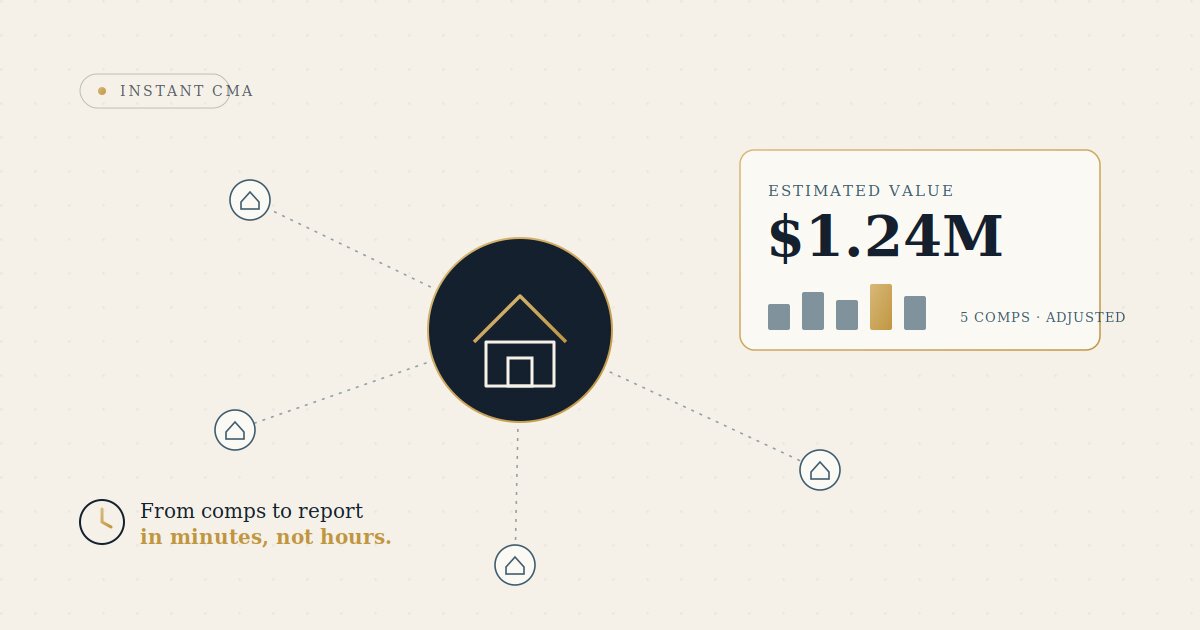
An instant CMA tool uses AI to collapse the manual grind — pulling comps, organizing the data, adjusting for differences, and building a presentation-ready report — into a couple of minutes. Platforms like Fello connect directly to MLS feeds and public records, automatically clean up and structure messy inputs, and hand you a polished, branded report ready to send to a client. The AI does the heavy lifting on the comp selection and adjustments, so you start from a finished draft instead of a blank spreadsheet.
What it isn’t: a formal or legal valuation, and not a substitute for your own read on the local market. The tool gives you a fast, data-backed starting point — your expertise is what turns it into an accurate, defensible price.
Where AI Genuinely Helps
- Speed on the first draft (walk into a listing appointment same day).
- Cleaner data handling (extract, normalize, flag outliers).
- Better-looking deliverables (presentation matters in luxury).
- More CMAs, more often (15 minutes vs. 3 hours = more touchpoints, more listings).
Where It Can Quietly Hurt You
- Garbage comps in, confident report out — AI formats a bad comp set as beautifully as a good one.
- Over-reliance on automated adjustments — views, renovations, micro-location are judgment calls.
- One number is not a pricing strategy.
Rule of thumb: let AI save you time, not make your decisions.
How to Fold It Into Your Workflow
- Start from MLS sold comps.
- Always review the comp set by hand.
- Override the adjustments that need a human.
- Keep the narrative yours.
- Present it as your work.
The Bigger Opportunity: Put the CMA on Your Website
A “What’s your home worth?” instant-valuation tool turns curious homeowners into named, contactable leads 24/7. The homeowner gets a ballpark; you get the lead and the chance to follow up with a real CMA that wins the listing.
Bottom Line
AI instant CMA tools are one of the clearest, lowest-risk wins in real estate tech right now. The agents who benefit most let it do the heavy lifting and keep judgment, strategy, and the relationship in human hands.
Frequently Asked Questions
1. What is an instant CMA tool?
It’s an AI-powered tool that collapses the manual grind of a comparative market analysis, pulling comps, organizing data, adjusting for differences, and building a presentation-ready report, into a couple of minutes. Platforms like Fello connect directly to MLS feeds and public records, clean up messy inputs automatically, and hand you a polished, branded report.
2. How much time can an AI CMA tool actually save?
Most agents spend two to four hours on a single CMA by hand. AI can bring that down to roughly 15 minutes, which means you can walk into a listing appointment the same day and produce more CMAs more often.
3. Does an instant CMA replace a professional appraisal?
No. It is not a formal or legal valuation, and it’s not a substitute for your own read on the local market. It gives you a fast, data-backed starting point; your expertise is what turns it into an accurate, defensible price.
4. Where does AI genuinely help with CMAs?
In four main areas: speed on the first draft, cleaner data handling (extracting, normalizing, and flagging outliers), better-looking deliverables that matter in luxury markets, and the ability to produce more CMAs more often, creating more client touchpoints and more listings.
5. What are the risks of relying on an AI CMA tool?
AI will format a bad comp set just as beautifully as a good one, so garbage in means a confident but wrong report out. It can also over-rely on automated adjustments when factors like views, renovations, and micro-location are judgment calls. And remember, one number is not a pricing strategy.
6. How should I fit an AI CMA tool into my workflow?
Start from MLS sold comps, always review the comp set by hand, override the adjustments that need a human, keep the narrative yours, and present the final result as your own work. The rule of thumb: let AI save you time, not make your decisions.
7. Can I put a CMA tool on my own website?
Yes, and it’s a major opportunity. A “What’s your home worth?” instant-valuation tool turns curious homeowners into named, contactable leads 24/7. The homeowner gets a ballpark figure, and you get the lead plus the chance to follow up with a full CMA that wins the listing.
8. Why are AI CMA tools considered a low-risk win in 2026?
They’re one of the clearest, lowest-risk wins in real estate tech right now because they speed up the tedious assembly work while keeping judgment, strategy, and the client relationship firmly in human hands, which is the part a seller actually pays for.